What’s an RBI in Baseball: The Canuck Guide to Runs Batted In
Read Time:11 Minute, 2 Second
What’s An RBI in Baseball? The Basics
You know that feeling when the Jays are down by one in the bottom of the ninth, bases loaded, and everyone’s holding their breath at the Rogers Centre? That’s where the RBI lives. If you’ve ever found yourself explaining the game to a buddy during a slow inning and they ask, what’s an RBI in baseball, you usually just say, “It’s when a guy hits the ball and someone scores.” And honestly? You’re mostly right. But like everything in baseball, there’s a bit more spice to it than that.
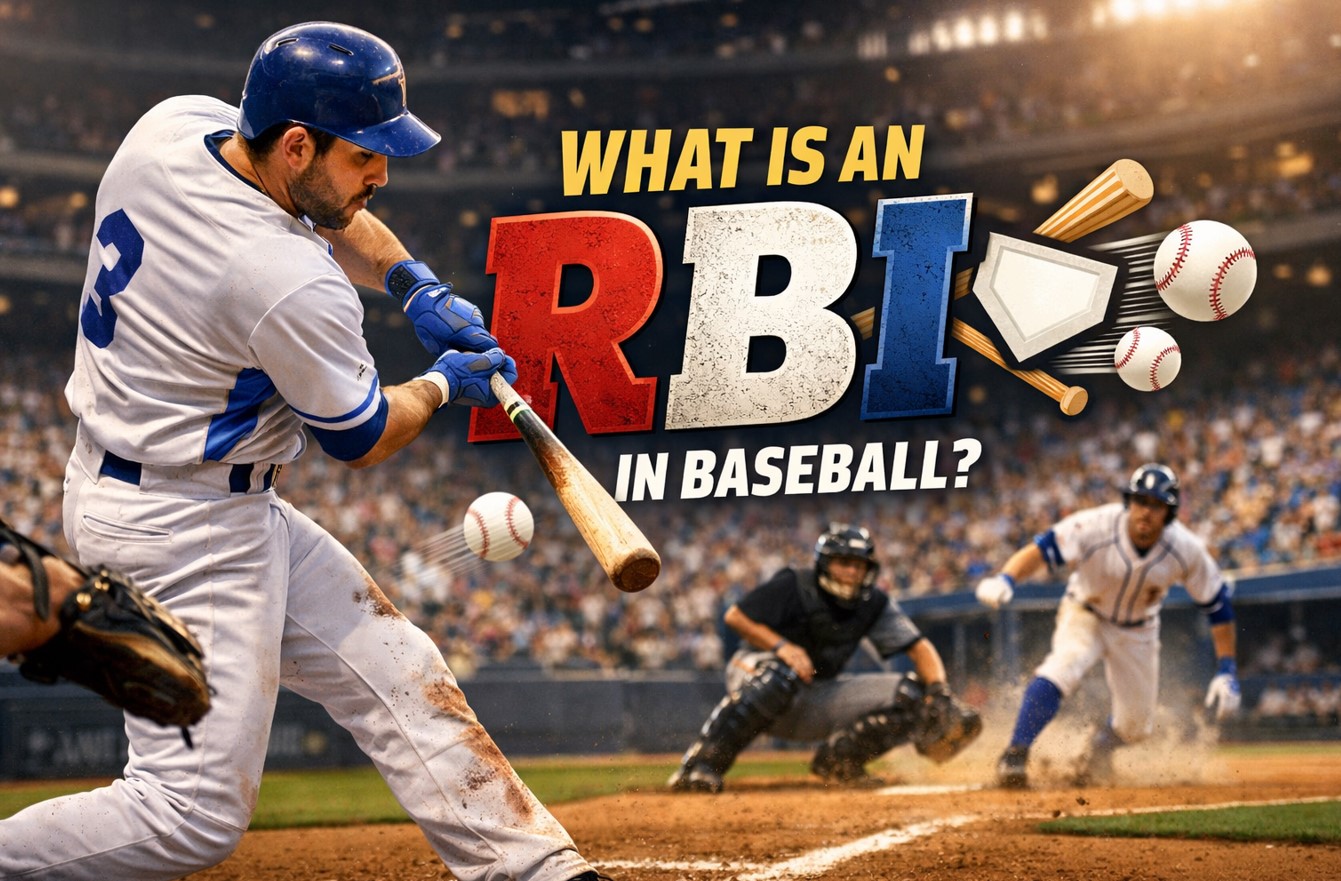
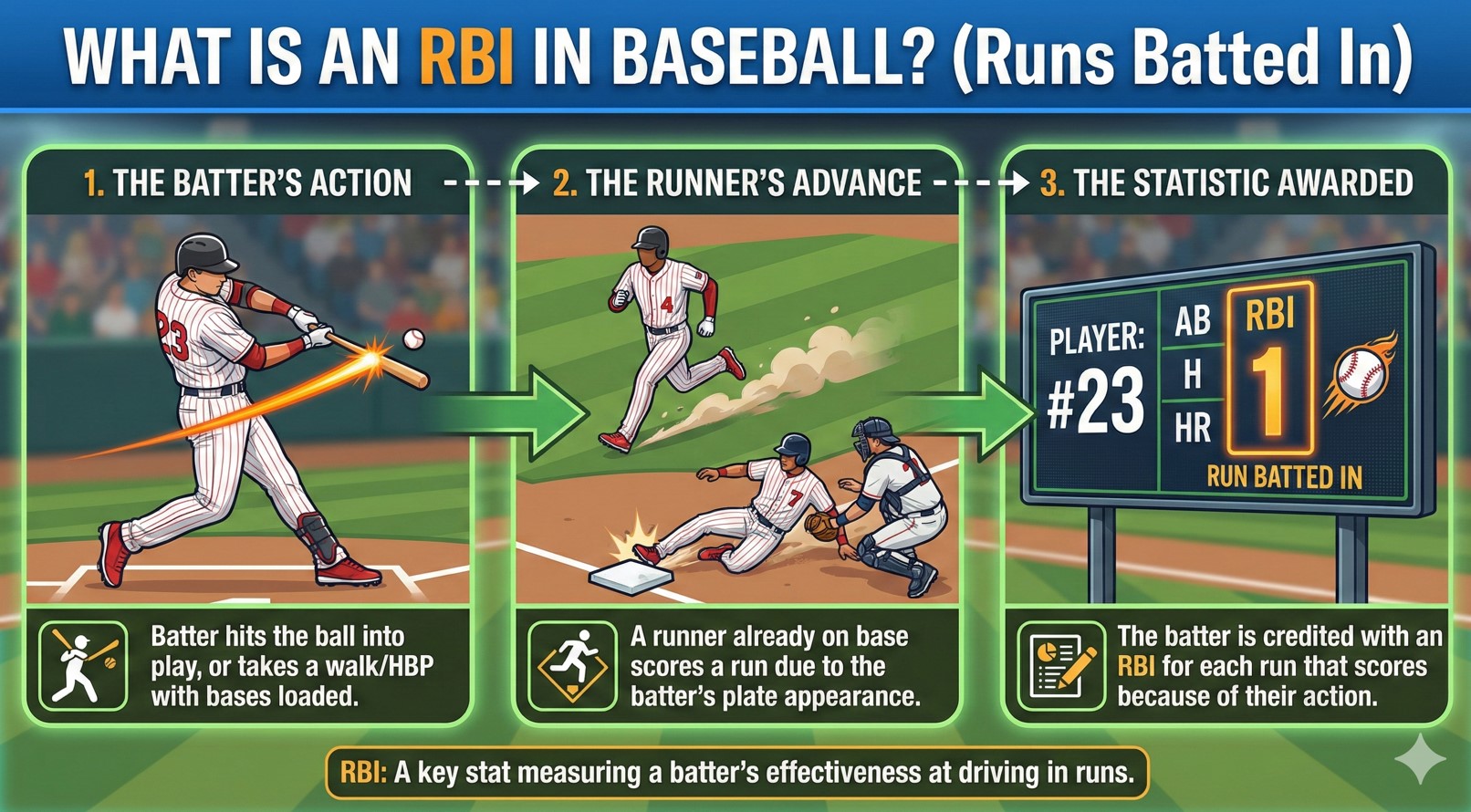
So, let’s break it down, simple style. RBI stands for Run Batted In. It’s a stat credited to a batter when the outcome of their plate appearance results in a run being scored. It’s the bread and butter of traditional baseball cards. It tells you who’s clutching up and bringing the boys home. Whether it’s a massive dinger into the Flight Deck or a scrappy sacrifice fly, if a run crosses the plate because of what the batter did, that’s an RBI.
The Nitty Gritty of the Rule
Here’s the thing – baseball loves its fine print. You don’t just get an RBI for hitting the ball. The official scorer is watching like a hawk. You get an RBI when a runner scores because of:
- A base hit (obviously).
- A sacrifice bunt or sacrifice fly.
- An infield putout or fielder’s choice.
- A batter being hit by a pitch (HBP) or walking with the bases loaded.
- Reaching base on an error (sometimes, we’ll get to that).
It sounds straightforward, but try explaining the “error” part to a casual fan after a couple of stadium beers.
Why We Care About RBIs Up North?
Look, in Canada, we appreciate the grind. The RBI is a grinder’s stat. It’s not just about how pretty your swing is; it’s about results. Did you get the job done? Did you cash in the ticket? Think about Joe Carter in ’93. When he touched ’em all, that wasn’t just a home run; those were the most famous RBIs in Canadian history. That’s the emotional weight of this stat. It’s the difference between a solo shot in a blowout and a game-winning ribbie in October.
What’s An RBI in Baseball – Rulebook Cheat Sheet
To really get it, you need to see where the line is drawn. It’s not always a charity giveaway. There are strict rules on when you don’t get that sweet stat padding.
| Scenario | RBI Credited? | Why or Why Not? |
| Base hit scores runner | YES | The classic. You hit, they run, we cheer. |
| Bases loaded walk | YES | You didn’t swing, but you forced a run home. Good eye! |
| Grounding into double play | NO | Even if a run scores, killing the rally with a GIDP wipes the RBI. |
| Scoring on an error | MAYBE | Only if the scorer thinks the run would’ve scored without the error. |
| Wild pitch / Passed ball | NO | That’s on the pitcher or catcher, not the batter’s skill. |
| Stealing home | NO | That’s all the runner’s hustle. Batter gets zilch. |
What’s an RBI in Baseball When It Comes to Errors?
This is where arguments start in the stands. Imagine Vladdy hits a hot shot to third. The third baseman bobbles it, throws it into the dugout, and a runner from second scores. Is that an RBI? Usually, the scorer asks: “Would that runner have scored if the play was made cleanly?”
If the answer is no, then sorry, no RBI. It’s cruel, but baseball doesn’t care about your feelings. It cares about accuracy. If the error is the only reason the run scored, the batter doesn’t get credit for driving it in.
The Old School vs. The Calculator Crew
You can’t talk about what’s an RBI in baseball without bringing up the war between the old guard and the analytics nerds.
If you ask your grandpa or an old-school scout, the RBI is the holy grail. It measures “clutch.” It tells you who can handle the pressure. They’ll point to a guy with 100 RBIs and say, “That’s a hitter.” And there is truth to that. You have to put the bat on the ball at the right time.
But then you’ve got the new wave-the sabermetrics crowd. They argue that RBIs are a “dependent” stat. And they have a point too. You can’t drive in runs if nobody is on base, right? If you’re batting leadoff for a team that can’t get on base, you could hit .300 and still have low RBI numbers.
Think about it like this:
- The Argument For: It measures the ability to deliver under situational pressure.
- The Argument Against: It relies too much on teammates getting on base ahead of you.
Honestly? Both sides are right. But for us fans watching the game, seeing that RBI count climb is still the most exciting part of the box score.
What’s an RBI in Baseball History for Canadians?
We’ve had some absolute mashers come out of this country. Talking about RBIs gives us a chance to flex some Canadian muscle. Larry Walker? The guy was a machine. Joey Votto? He might walk a lot, but the man knows how to drive ’em in when it counts.
| Player | Year | RBIs | Team | Vibe |
| Larry Walker | 1997 | 130 | Rockies | Absolute MVP monster season. |
| Justin Morneau | 2006 | 130 | Twins | Another MVP year from a B.C. boy. |
| Joey Votto | 2010 | 113 | Reds | The year Votto didn’t just walk, he crushed. |
| Vladimir Guerrero Jr. | 2021 | 111 | Blue Jays | Technically Dominican-Canadian, but he’s our Montreal-born son. |
And you know what? That 2021 season from Vladdy was special. He was chasing the Triple Crown for a minute there. That’s when everyone was googling what’s an RBI is in baseball because suddenly, the stats mattered to everyone, not just the hardcores.
The Art of the Sacrifice
One of the most selfless things in sports is the sacrifice fly. It’s an RBI, but it doesn’t hurt your batting average.
Here’s the play: Runner on third, less than two outs. The batter lifts a deep fly ball to the outfield. The outfielder catches it (one out), but the runner tags up and sprints home. Run scores.
The batter gets an RBI. He doesn’t get a hit, but he also doesn’t get an “at-bat” charged against him. It’s a win-win. It’s the ultimate “taking one for the team” moment. In the stats column, it shows up as an SF. But in the locker room? That’s pure respect.
Situational Hitting: The “Productive Out”
Sometimes an out is just an out. But sometimes, an out is money.
Grounding out to second base to move a runner from second to third? That’s good baseball. Grounding out to score a runner from third? That’s an RBI. It’s not flashy. It won’t make the highlight reel on SportsCentre unless it’s a walk-off. But coaches love it. It’s about manufacturing runs.
When people ask whats an RBI in baseball, they usually imagine a grand slam. But honestly? The groundout to short that scores a run in the 4th inning is just as valuable on the scoreboard. It’s about playing the game right.
Why Is an RBI in Baseball Tricky for Pitchers?
We focus on hitters, but pitchers care about this too-just in reverse. They want that number to be zero.
There’s a stat called “Earned Run Average” (ERA), which is the pitcher’s report card. But interestingly, a pitcher can give up a run that is an RBI for the batter, but isn’t an earned run for the pitcher (thanks to errors).
It’s weird, right? The batter gets credit for driving it in, but the pitcher doesn’t get blamed for letting it happen if his defense messed up behind him. It’s one of those quirks that makes baseball the most accounting-heavy sport on the planet.
3 Ways to Spot an RBI Machine
If you’re looking to draft a fantasy team or just want to sound smart at the bar, here’s how to spot a guy who’s going to rack up RBIs:
- Batting Order Position: You want guys hitting 3rd, 4th, or 5th. That’s the “heart of the order.” The guys batting 1st and 2nd are supposed to get on base. The guys in the middle are supposed to drive them in.
- Runners in Scoring Position (RISP) Stats: Some guys crumble when the pressure is on. Others turn into absolute beasts. Look for a high batting average with RISP. That’s your clutch factor.
- Power Numbers: Let’s be real. Hitting homers is the easiest way to get RBIs. You drive yourself in! A guy with 40 homers is almost guaranteed to have 100+ RBIs unless he’s hitting solo shots all year (we call that “The pull hitter’s curse”).
The Grand Slam: The Jackpot
The maximum number of RBIs you can get in one swing is four. The Grand Slam. Bases loaded. Ball goes boom.
In Canada, nothing beats the “Get up, ball! Get up!” call when the bases are juiced. A grand slam changes the entire momentum of a game. It’s 4 RBIs on one swing. It destroys the pitcher’s confidence and sends the crowd into a frenzy. It’s the best feeling in the sport, hands down.
Common Myths About RBIs
Let’s clear up some junk info floating around.
- Myth: You get an RBI every time a run scores on your play.
- Truth: Nope. Remember the Double Play rule? If you hit into a 6-4-3 double play and a run scores, you get nothing. Zero. Zilch. It’s considered a rally killer, so they don’t reward you for it.
- Myth: Leadoff hitters can’t get RBIs.
- Truth: They can, and they do! If the bottom of the lineup (the 8 and 9 hitters) gets on base, the leadoff guy becomes the RBI man. A good leadoff hitter like George Springer has plenty of power to drive guys in.
- Myth: RBIs are the best stat to judge a player.
- Truth: We covered this, but it’s worth repeating. It’s a context stat. A great hitter on a terrible team might only have 60 RBIs because nobody is ever on base for him. Don’t judge a guy solely on his ribbies.
Why Does An RBI in Baseball Change Over Time?
The game is changing. We’re seeing more home runs, more strikeouts, and fewer balls in play. This changes how RBIs happen. Back in the day, there was a lot of “small ball”-bunts, hit-and-runs, stealing bases. Now? It’s launch angle city.
Teams are built to hit three-run homers. That means the “RBI guy” is more important than ever, but he looks different. He might strike out 150 times a year, but if he hits 35 homers, he’s getting paid. The definition of “an RBI” in baseball hasn’t changed, but how we get them has.
The Canadian Context: The Expos and The Jays
We can’t finish this without tipping our caps to the history up here. The Montreal Expos (RIP, we miss you) had some absolute legends. Andre Dawson? Gary Carter? Vladimir Guerrero Sr.? These guys were RBI factories.
And the Jays? From the Drive of ’85 to the Back-to-Back champs, this team has been built on offense. We like the big bats. We like the three-run blasts. In Toronto, we don’t play for 1-0 games. We want 10-8 slugfests. That’s just how we roll.
So next time you’re at a game, and the scoreboard lights up, you’ll know exactly what’s going on. You’re watching the most important transaction in the game: runs for outs.
FAQ
Can you get an RBI on a walk?
You bet. If the bases are loaded and you walk, the runner on third is forced home. Easy RBI.
What’s an RBI in baseball if I hit into a double play?
Zero, zip, nada. GIDP (Ground into Double Play) cancels out the run scoring credit. It’s a bummer.
Who has the most RBIs in a single season?
Hack Wilson back in 1930 with 191. Honestly, that record is probably never getting broken. It’s insane.
Do leadoff hitters usually get many RBIs?
Not usually. Their job is to set the table, not clear it. But power-hitting leadoff guys are changing that vibe.
Is a solo home run considered an RBI?
100%. You drive yourself in! One run scored, one RBI for you.
What’s the difference between RBI and Runs Scored?
RBI is for the hitter who caused the run. “Runs Scored” is for the guy who actually crossed the plate.
Why do analytics guys hate RBIs?
They think it relies too much on luck – specifically, how good your teammates are at getting on base before you.
Conclusion
So there you have it. The answer to what’s an RBI in baseball isn’t just a definition; it’s a peek into the soul of the game. It’s about being reliable. It’s about stepping up when the game is on the line. Whether you’re a stat-head crunching numbers or just a fan screaming for a fly ball to carry, the RBI is what puts numbers on the scoreboard. And in the end, that’s the only thing that really counts.
Keep your stick on the ice, bat on the ball, Canada!


Happy
0 %

Sad
0 %

Excited
0 %

Sleepy
0 %

Angry
0 %

Surprise
0 %
 0
0
 0
0


Average Rating