What Is A Run in Baseball?
Read Time:9 Minute, 35 Second
What Is a Run in Baseball and Why Does It Matter?
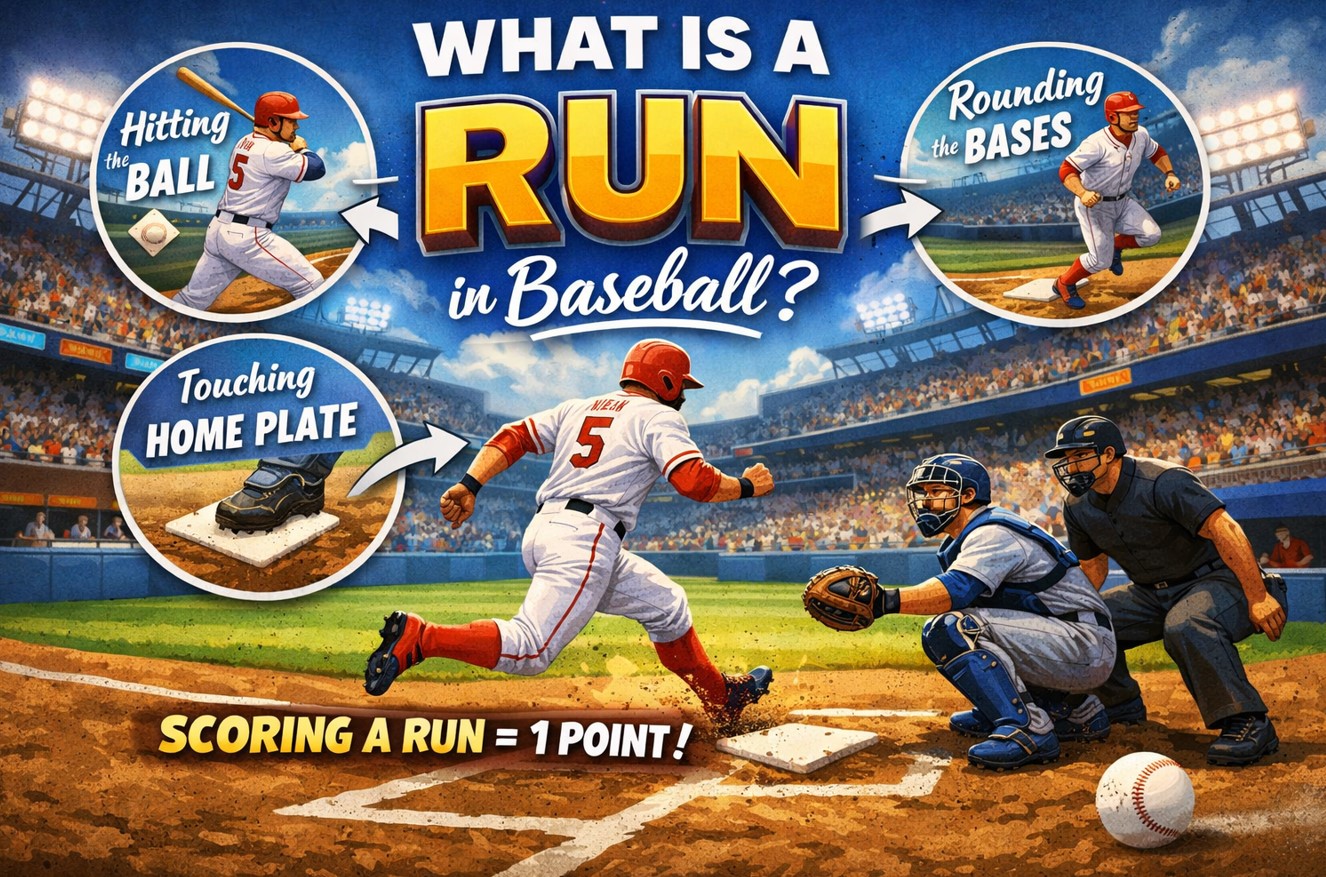
Honestly, if you’ve ever sat in the 500 level at the Rogers Centre with a cold drink and a hot dog, you know the vibe. The crack of the bat happens, the crowd jumps up, and suddenly everyone is screaming. But for someone just getting into the game, it can be a bit much. You see a guy sprinting around the dirt, sliding into home plate, and the scoreboard flips. That, my friend, is a run.
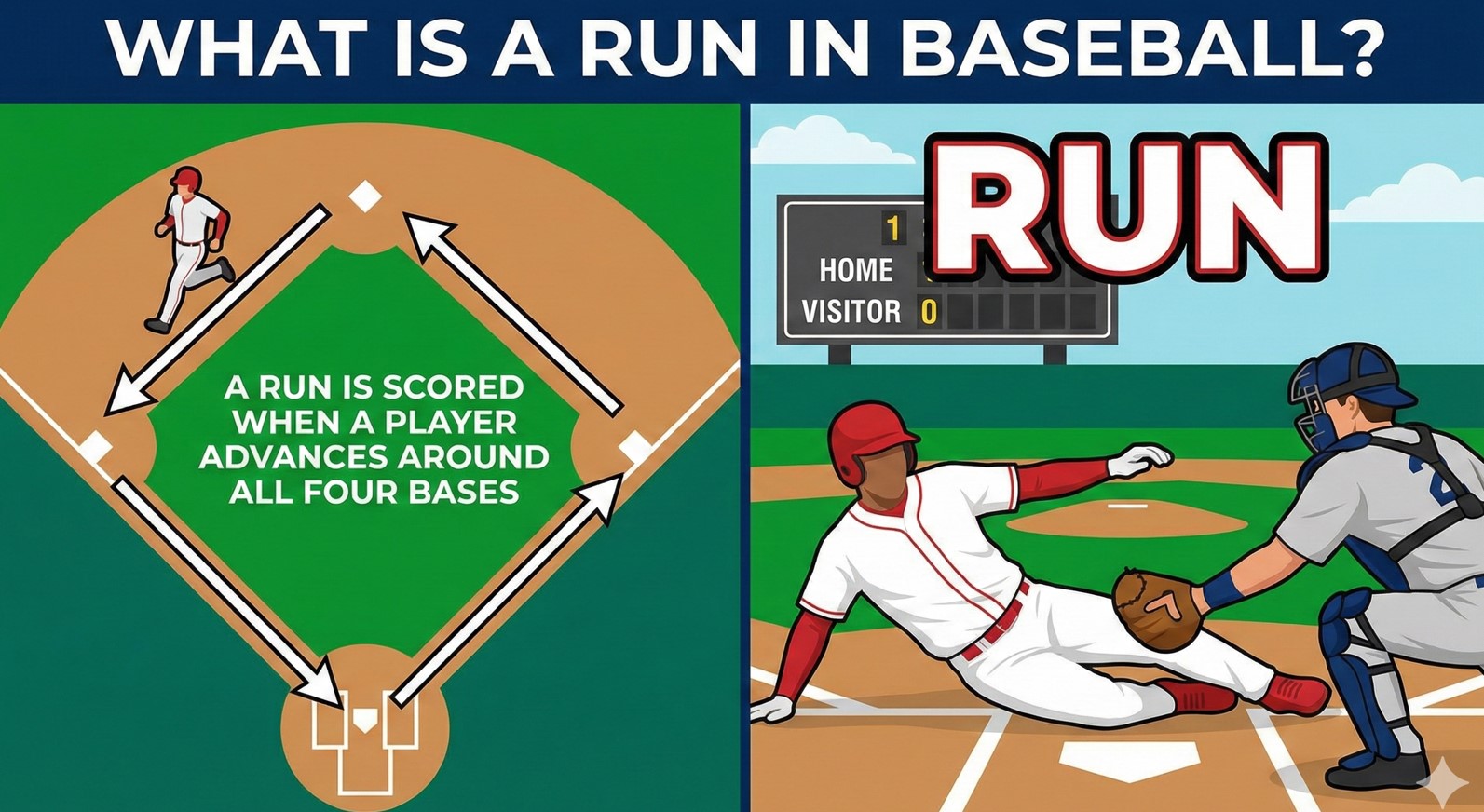
In the simplest terms, a run is the only way to actually put points on the board. Unlike hockey, where you put a puck in a net, or football, where you cross a goal line with the ball, baseball is about the person. You are the “puck.” To get a run, a player has to touch all four bases in order-first, second, third, and finally home-without being put out.
It sounds easy, but when you have a pitcher throwing 98 miles per hour at your head and nine guys in the field trying to tag you, it gets tricky. I’ve seen games where a team gets ten hits but zero runs. It’s frustrating, right? But that’s the beauty of the sport. You can have all the action in the world, but if nobody touches that white pentagon at the end of the line, it doesn’t count for squat.
The Journey Around the Diamond
So, how does the magic happen? It usually starts with a hit. Maybe a bloop single over the shortstop’s head or a double down the line. Once you’re on base, you’re a “baserunner.” Your goal is to move up. You can move because the next guy hits the ball, or maybe you’re feeling brave and decide to steal second.
The thing is, you don’t always need a hit to score. Sometimes the pitcher loses his rhythm and walks a guy with the bases loaded. That’s a “walk-in” run. It’s not the most exciting way to score, but hey, it counts the same as a 450-foot blast.
Let’s look at the basic ways a player moves toward home:
- Base Hits: Singles, doubles, and triples move the runners.
- Errors: Sometimes the fielder just drops the ball. It happens to the best of them.
- Walks and Hit by Pitch: Free passes to first base that push other runners forward.
- Sacrifice Flies: Hitting it deep enough so a guy on third can run home after the catch.
What Is a Run in Baseball Compared to An RBI?
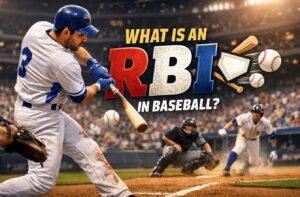
This is where people get confused. You’ll hear the announcer say, “Vladimir Guerrero Jr. just picked up his 90th RBI.” An RBI stands for “Run Batted In.” If Vladdy hits a double and Bo Bichette scores from second, Vladdy gets an RBI, but Bo gets the run.
Think of it like a group project. The person who crosses the plate gets the “Run” stat. The person who hits the ball to get them there gets the “RBI” stat. If you hit a home run, you get both. You drove yourself in. Pretty efficient, if you ask me.
| Metric | Who gets the credit? | What does it measure? |
| Run (R) | The person crossing home plate | Personal scoring ability and speed |
| Run Batted In (RBI) | The person hitting the ball | Ability to drive teammates home |
The Home Run: The Ultimate Scoring Play
There isn’t a better sound in sports than a wood bat hitting a ball perfectly. When it goes over the fence, that’s a home run. It’s the most direct answer to what is a run in baseball. You don’t have to worry about being tagged or forced out. You just take a nice, slow jog around the bases, maybe high-five the third-base coach, and step on home.
But even home runs have different “values” depending on how many people are on base:
- Solo Shot: Just the hitter. (1 Run)
- Two-Run Blast: Hitter plus one runner. (2 Runs)
- Three-Run Homer: Hitter plus two runners. (3 Runs)
- Grand Slam: The holy grail. Bases are loaded, and you get 4 runs in one swing.
I remember watching a Jays game a few years back where the energy was just dead. Then, out of nowhere, a grand slam turned the whole night around. The stadium literally shakes. It’s those moments that make the long 162-game season worth it.
The “Dirty” Ways to Score
Not every run is pretty. In fact, some of the best games are won on “small ball.” This is when teams use bunts, steals, and aggressive baserunning to trick the defense.
Have you ever seen a “wild pitch” score a run? The catcher misses the ball, it rolls to the backstop, and the guy on third sprints home like his life depends on it. It’s chaotic. Or the “squeeze play,” where a hitter bunts the ball while the runner is already sprinting toward home. It’s a high-risk move, but when it works, it makes the opposing pitcher look absolutely silly.
Why Scoring Is Getting Harder (and Easier)?
Baseball changes every few years. With the new pitch clock and bigger bases, we’re seeing more stolen bases. More steals mean more runners on second and third. And more runners in “scoring position” means – you guessed it – more runs.
But pitchers are also getting nastier. These guys are throwing sliders that look like they’re falling off a table. It’s a constant battle. You know what? That’s why we love it. The struggle to get just one run can be more intense than a blowout game.
| Scoring Scenario | Description | Frequency |
| Earned Run | A run scored because of hits or walks (pitcher’s fault) | Most common |
| Unearned Run | A run scored because of a fielding error | Common |
| Scored on a Balk | Pitcher makes an illegal move, runner moves up | Rare |
Force Outs and the “Third Out” Rule
Here is a catch that trips up a lot of new fans. Imagine there are two outs. A runner is on third base. The batter hits a ground ball to shortstop, and the shortstop throws the batter out at first for the third out. Even if the runner from third crossed home plate before the out happened, the run does not count.
Why? Because you can’t score on a play where the third out is a force out at first base. It feels a bit unfair, doesn’t it? The guy ran all that way for nothing. But those are the breaks. It keeps the defense in the game.
What Is a Run in Baseball for The Pitcher?
While hitters want runs, pitchers hate them. For a pitcher, runs are divided into “Earned” and “Unearned.”
- Earned Runs: These are the pitcher’s “fault.” He gave up the hits or walks that led to the score.
- Unearned Runs: These happened because the defense messed up. If a shortstop boots a routine grounder and that runner eventually scores, the pitcher’s ERA (Earned Run Average) isn’t affected.
Look, nobody likes a “cheap” run, but at the end of the day, the scoreboard doesn’t care if the run was earned or not. A win is a win, especially when you’re fighting for a Wild Card spot in September.
Small Ball vs. The Long Ball
In Canadian baseball circles, there’s always a debate. Do you want a team like the old-school Jays that relies on massive home runs? Or do you want a team that grinds out runs with bunts and sacrifice flies?
Honestly, I think you need both. You need the “table setters”-the fast guys who get on base and cause headaches. And you need the “cleanup hitters”- the big fellas who can clear the bases with one swing. When a team has both, they’re dangerous.
Let’s talk about the “sac fly.” It’s one of the most selfless plays in the game. You’re basically saying, “I’m going to get out on purpose just to get my buddy home.” You hit a high fly ball, wait for the catch, and then the runner “tags up” and bolts for home. It’s a beautiful bit of teamwork.
FAQ
Does a runner have to slide into home?
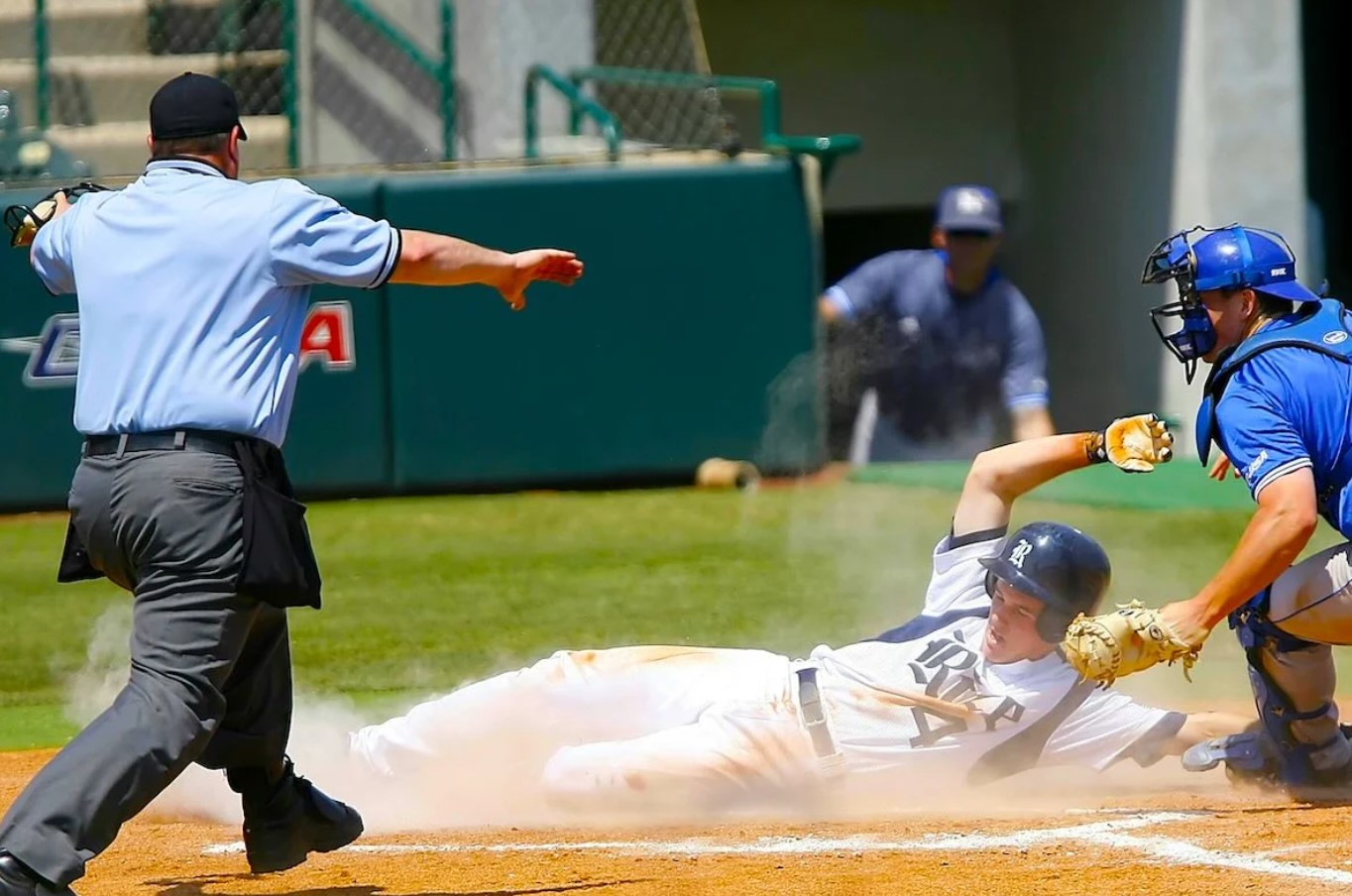
No, they don’t have to, but they usually do to avoid a tag or to get under the catcher’s glove. It’s more about safety and making sure they touch the plate.
Can a run score during a double play?
Yes, as long as the third out isn’t a force out. If a guy scores while his teammates are being doubled up at first and second, the run usually counts.
What is a “walk-off” run?
That’s the best kind. It’s a run scored by the home team in the bottom of the last inning that ends the game immediately. Everyone goes home happy (except the other team).
Does a pinch runner get credit for a run?
Yep! If you come in just to run for someone else and you cross the plate, that run goes on your stat sheet.
How many runs can you score in one inning?
Technically, there’s no limit. As long as you don’t get three outs, you can keep scoring until the sun comes up.
What happens if the game is tied after 9 innings?
In the pros, they play “extra innings.” In some leagues now, they even put a runner on second base to start the inning to help runs score faster.
Is a run the same as a point?
In spirit, yes. But if you call it a “point” at a live game, the person sitting next to you might give you a funny look. It’s always a run!
Can you score on a strikeout?
Actually, yes. If the catcher drops the third strike (and first base is open or there are two outs), the batter can run to first. If there’s a guy on third and he reaches home while the defense is scrambling to get the batter at first, that run counts. It’s rare, but it’s hilarious when it happens.
Does a run count if the hitter misses a base?
Nope. If the defense notices and appeals (throws the ball to the base the runner missed), the runner is out and the run is wiped off the board. You’ve got to touch the bags!
What if the ball hits the runner?
If a batted ball hits a runner before a fielder touches it, the runner is usually out. No run for you. It’s one of the most frustrating ways to end an inning:
- Always watch the lead runner: They tell the story of the inning.
- Keep an eye on the third-base coach: He’s the one waving people home or giving the “stop” sign.
- Check the exit velocity: Harder hits usually lead to more runs.
Wrapping Up
At the end of the day, baseball is a game of 90-foot increments. Every inch matters. Whether it’s a sliding catch at the plate or a ball lost in the lights, the pursuit of that one extra run is what keeps us coming back to the ballpark.
It’s about the tension. The bases are loaded, the count is full, and you know that one pitch could change the entire game. That’s why we sit through the long innings and the rain delays. Because when that run scores, it’s the best feeling in the world.
So, the next time you’re watching the game, you’ll know exactly what’s happening when things get wild on the basepaths. It’s all about getting home.


Happy
0 %

Sad
0 %

Excited
0 %

Sleepy
0 %

Angry
0 %

Surprise
0 %
 0
0
 0
0