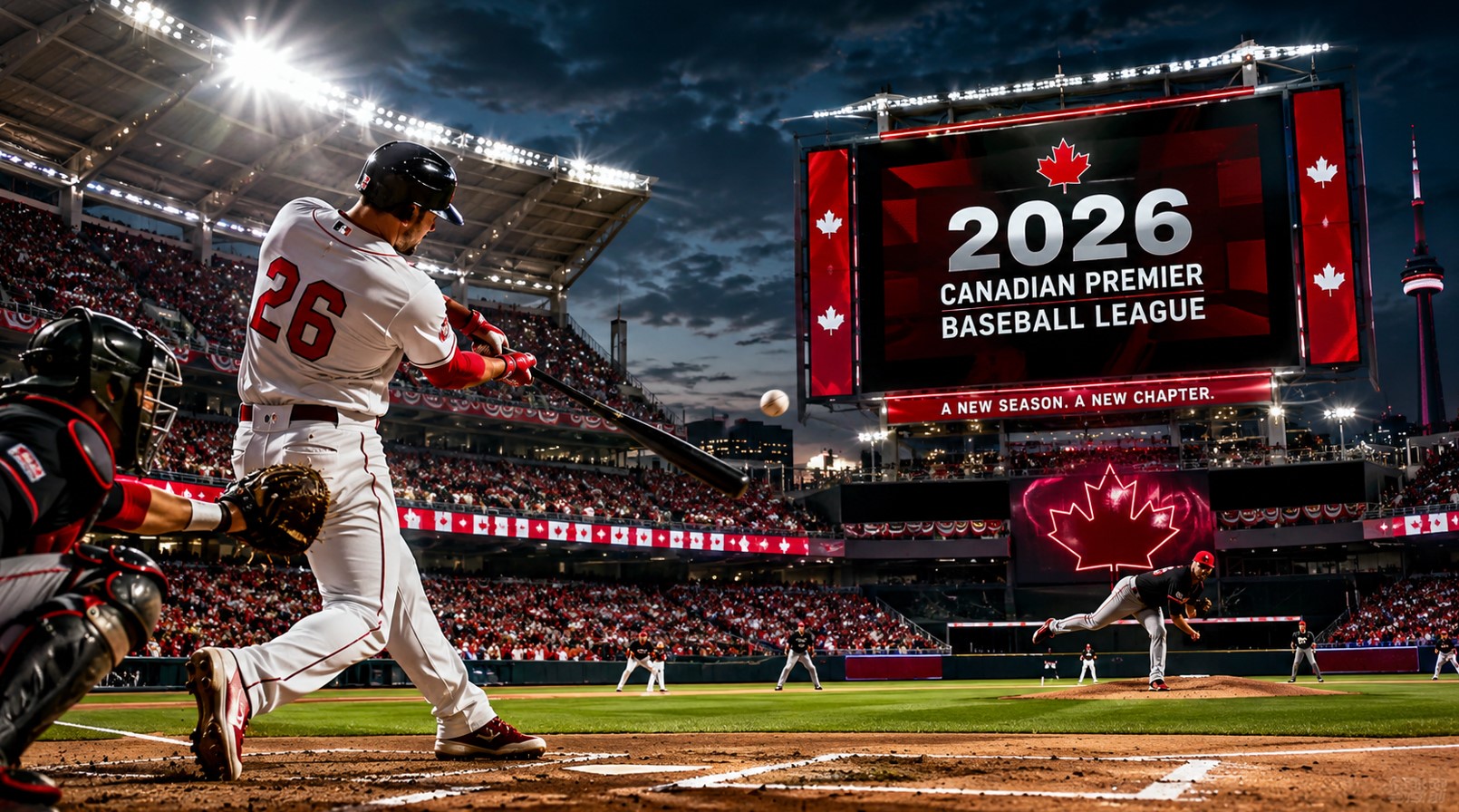
2026 CPBL Playoff: What to Expect from Top Baseball Talent
Read Time:11 Minute, 54 Second
The Road to the 2026 CPBL Playoff Is Heating Up
Summer in Ontario brings a few guarantees. You can count on humid afternoons, cottage traffic on the 400, and some of the best amateur baseball anywhere in the country. Honestly, if you have not been out to a local diamond to watch the Canadian Premier Baseball League lately, you are missing out on something special. This league has quietly grown into an absolute powerhouse for producing elite talent. And as we get closer to the end of the regular season schedule, all the chatter is focused on the 2026 CPBL Playoff.
You know what makes this level of baseball so engaging? It is the raw hunger of the players. We are talking about 16, 17, and 18-year-old kids who are fighting for college scholarships and MLB draft attention. They play with a level of intensity that you just do not see every day. The crack of a wood bat on a hazy July evening, the dust kicking up around second base, and the tension of a tied game in the seventh inning-it just feels right.
This year, the race for the postseason is as tight as it has ever been. Teams are jockeying for seeding, trying to get their pitching rotations lined up just right. A deep run in the 2026 CPBL Playoff can change a young player’s entire trajectory. College recruiters flock to these games, radar guns in hand, looking for that next big arm or gap-to-hit slugger.
The Grind: What It Takes to Reach the Postseason
Let me explain what a season actually looks like for these families. It is not just showing up on a Tuesday night for a quick game. The commitment is massive. Players train indoors all winter, taking countless reps in batting cages while the snow piles up outside. By the time the snow melts, these guys are ready to go.
Then comes the travel. Oh, the travel. Parents put thousands of kilometers on their minivans, driving from Windsor to Ottawa, and everywhere in between. You have got doubleheaders on Saturdays and another pair of games on Sundays. It is a grueling pace. And that is exactly what separates the top-tier teams from the rest of the pack. To make it to the playoffs, a team needs ridiculous pitching depth. You simply cannot survive a 30-plus game schedule and summer tournaments with just two good starters.
Here is what really tests a team during the dog days of summer:
- Bullpen management: Managing pitch counts during tight weekend tournaments so you have arms left for Sunday afternoon.
- Mental toughness: Shaking off a bad strikeout or a booted groundball when the heat index is pushing 35 degrees.
- Off-field routines: Eating right, stretching, and actually getting enough sleep between long road trips.
If a club can balance those three things, they usually find themselves playing meaningful baseball in August.
Why the 2026 CPBL Playoff Matters More Than Ever
You might be wondering why this specific tournament carries so much weight. The thing is, the landscape of amateur sports has shifted. US college programs are looking up north more than ever before. They realize that Canadian kids have a serious work ethic. When a team makes a deep run in the 2026 CPBL Playoff, every player on that roster gets a boost in visibility.
Scouts do not just want to see a kid hit a fastball in a batting cage. They want to see how that player reacts when the bases are loaded, there are two outs, and their team is facing elimination. The pressure is completely real. Do they shrink, or do they step up? That is the kind of stuff you can only evaluate during high-stakes playoff games.

Plus, there is the pride factor. These organizations-whether it is the Ontario Blue Jays, Great Lake Canadians, or Academie du Baseball Canada (ABC)-have built serious rivalries. Winning a championship banner in this league is a massive recruiting tool for the programs themselves.
Top Contenders Heading into the 2026 CPBL Playoff
The talent pool this year is incredibly deep. Several programs have shown they have the firepower to go all the way. Look, it is tough to predict baseball because a hot pitcher can shut down a great lineup on any given day. But based on how the season has unfolded, a few squads clearly stand out.
| Program Name | Typical Playstyle | Key Strength |
| Great Lake Canadians | Highly structured, fundamentally sound | Deep pitching rotations and solid defense |
| Ontario Blue Jays | Aggressive, fast-paced | High-end velocity and power bats |
| Academie du Baseball Canada (ABC) | Disciplined, athletic | Year-round training advantage and speed |
| Fieldhouse Pirates | Resilient, scrappy | Clutch hitting and strong bullpen management |
The Great Lake Canadians have built a dynasty over the last few years. They just do not make mistakes. If you give them an extra out, they will make you pay. On the flip side, the Ontario Blue Jays always seem to have guys throwing upper-80s or low-90s, which is tough for any high school hitter to handle. And you can never count out ABC; they bring a different level of athleticism and swagger from Quebec.
Division Breakdown: 18U vs 17U vs 16U
The league is split into different age groups, and the vibe changes depending on which field you are watching.
At the 18U level, you are watching young men. Many of these players have already committed to colleges. Some are waiting to hear their names called in the MLB draft. The game moves fast. Pitchers throw hard, hitters have serious pop, and the defensive plays are crisp. The 18U championship is the crown jewel of the league. It is the culmination of years of hard work.
Move over to the 17U field, and it is a slightly different story. This is often considered the most critical recruiting year. Players are still growing into their bodies. The talent is raw but incredibly exciting. A 17U game can be a bit more unpredictable. You might see a kid hit a 400-foot bomb, and then the next inning, someone throws the ball into the outfield on a routine pickoff play. It is part of the development process.
The 16U division is where you start to see the future stars separate themselves. The transition to full-time wood bat leagues is tough. Hitting a baseball with a wood bat requires way more barrel accuracy than using aluminum. The kids who figure it out early usually end up dominating the upper age brackets a year or two later.
Travel and Commitment in Canadian Baseball
Think about a typical weekend. You pack up the car on a Friday afternoon. Drive three hours. Check into a hotel. Grab a quick dinner. Wake up at 6:30 AM on Saturday for early batting practice. Play two games in the sweltering heat. Go back to the hotel, wash the uniforms in the bathtub, and do it all again on Sunday.
It is exhausting. But there is also a weird beauty to it. Those long car rides are where parents and kids bond. The tailgate conversations in the parking lot between games build lifelong friendships among families. It is a tight-knit community. Everyone knows everyone. You will see parents from opposing teams sharing a tent for shade or swapping stories about past tournaments.
The Showcase Tournaments and Cross-Border Rivals
While the league schedule is the meat and potatoes of the summer, the showcase tournaments add some serious spice. CPBL teams do not just play each other; they frequently travel down to the US to compete against the best American travel ball programs.
Heading down to Georgia for a Perfect Game tournament is a rite of passage. Playing against kids from Florida, Texas, and California is a massive test. The American teams play year-round outdoors. Our Canadian boys spend half the year hitting into nets inside freezing warehouses. Yet, time and time again, Canadian teams hold their own. They bring a gritty, chip-on-the-shoulder mentality that American teams often struggle to handle.
This cross-border experience pays huge dividends when the teams return home for the playoffs. Facing a guy throwing 93 mph in a Florida tournament makes a mid-80s fastball back in Ontario look like a beach ball.
Here is a typical flow of how a player’s year shapes up:
| Season | Focus Area | Location |
| Winter (Jan-Mar) | Strength building, mechanics, indoor reps | Local indoor facilities, domes |
| Spring (Apr-May) | US trips, early exhibition games | Southern US, Ontario turf fields |
| Summer (Jun-Jul) | CPBL regular season, US showcases | Ontario and US |
| Late Summer (Aug) | CPBL Playoffs, national tournaments | Ontario |
The Impact of Weather on the Canadian Baseball Season
We have to talk about the weather. You cannot discuss Canadian sports without bringing up the sky. Up here, Mother Nature dictates the schedule.
In early May, you will see players wearing long sleeves, hoodies under their jerseys, and trying to blow warm air into their batting gloves. Hitting a ball off the end of the bat when it is 5 degrees outside will rattle your teeth. It is miserable.
Then, suddenly, July hits. The humidity rolls in off the Great Lakes, and the air gets so thick you can barely breathe. Rainouts are a constant headache. A quick pop-up thunderstorm can ruin a beautifully groomed dirt infield in ten minutes.
This causes massive scheduling chaos. Teams end up playing four games in two days just to make up for lost time. It completely wrecks pitching rotations.
Here is how weather forces teams to adapt:
- Turf fields: More programs are investing in turf fields so they can play immediately after a rainstorm.
- Deep rosters: You need extra arms to handle condensed, makeup-heavy schedules.
- Mental flexibility: Players learn not to get upset about delays. You might sit in a dugout for two hours waiting for lightning to clear, and then you have to be ready to hit a curveball five minutes later.
A Look Back at Past Champions
History matters in this league. The programs that win consistently do so because they have built a culture of winning. The older guys teach the younger guys how to carry themselves.
If you look back a few years, you see the Great Lake Canadians going on an absolute tear across multiple age groups. They created a blueprint. They prioritized pitching depth and flawless defense. But the rest of the league has caught up. The Ontario Blue Jays have retooled, the Toronto Mets are always dangerous, and the Ontario Terriers have shown they can grind out wins when it matters.
The parity in the league right now is fantastic for the sport. Blowouts are becoming less common. You are seeing more 3-2, 2-1 baseball games. That means better development for the players because every pitch matters. There are no easy innings anymore.
Preparing for the Big Stage: Academies and Winter Training
The secret to Canadian baseball success does not happen in June; it happens in January. The rise of high-tech training facilities has completely leveled the playing field.
Years ago, players just hit off a tee in a gym. Now? We have got Rapsodo machines tracking spin rates, HitTrax analyzing exit velocities, and slow-motion cameras breaking down swing mechanics frame by frame. Players are treating their bodies like professional athletes before they even get a driver’s license.
They work with nutritionists, sport psychologists, and specialized strength coaches. The Academie du Baseball Canada is a prime example of this professional approach. They run their program like a minor league affiliate. It is intense, but it is necessary if these kids want to compete against guys from warm-weather states who play 120 games a year.
This winter work translates directly to the field. When a kid steps into the box during the playoffs, he knows his swing is dialed in. He has seen the data. It builds a quiet confidence that you can clearly see when the pressure is on.
FAQ
What is the CPBL in Canada?
The Canadian Premier Baseball League is the top amateur baseball organization in Ontario, featuring elite travel programs that develop players for college and professional ranks.
When do the playoffs usually happen?
The postseason typically takes place in late July or early August, wrapping up the busy summer schedule before players head off to school.
Do these teams play American teams?
Yes, they frequently travel to the US to compete in major showcase events, like Perfect Game tournaments, to gain exposure to college scouts.
Do they use wood or aluminum bats?
The league uses wood bats. This helps prepare players for the professional level and gives scouts a truer read on their hitting ability.
How do players get noticed by colleges?
Scouts attend CPBL league games and playoffs, but playing in US tournaments and having strong metrics from winter training also play a massive role.
Are there different age divisions?
Yes, the league spans several age groups, typically ranging from 14U all the way up to 18U, allowing for gradual development.
What happens if a game gets rained out?
Weather is a big issue. Rained-out games are usually rescheduled as doubleheaders later in the season, which severely tests a team’s pitching depth.
Wrapping Things Up Before the First Pitch
So here we are. The regular season is winding down, the standings are tight, and the brackets are almost set. The energy around the ballparks is palpable.
For the seniors, this might be the last time they play with kids they have known since they were ten years old. That adds a heavy layer of emotion to every game. You will see tears after elimination games, and you will see pure, unadulterated joy from the teams that lift the trophy.
The 2026 CPBL Playoff is shaping up to be an absolute classic. The talent is there, the rivalries are deep, and the stakes could not be higher. If you have a free weekend this August, find a schedule online, grab a lawn chair, and head down to the local diamond. Buy a hot dog, sit behind home plate, and watch these kids work. I promise you, the level of baseball will blow you away.


Happy
0 %

Sad
0 %

Excited
0 %

Sleepy
0 %

Angry
0 %

Surprise
0 %
 0
0
 0
0


Average Rating